Complex Newscalendar_today
New technology reshapes the cornea without lasers or surgical incisions.
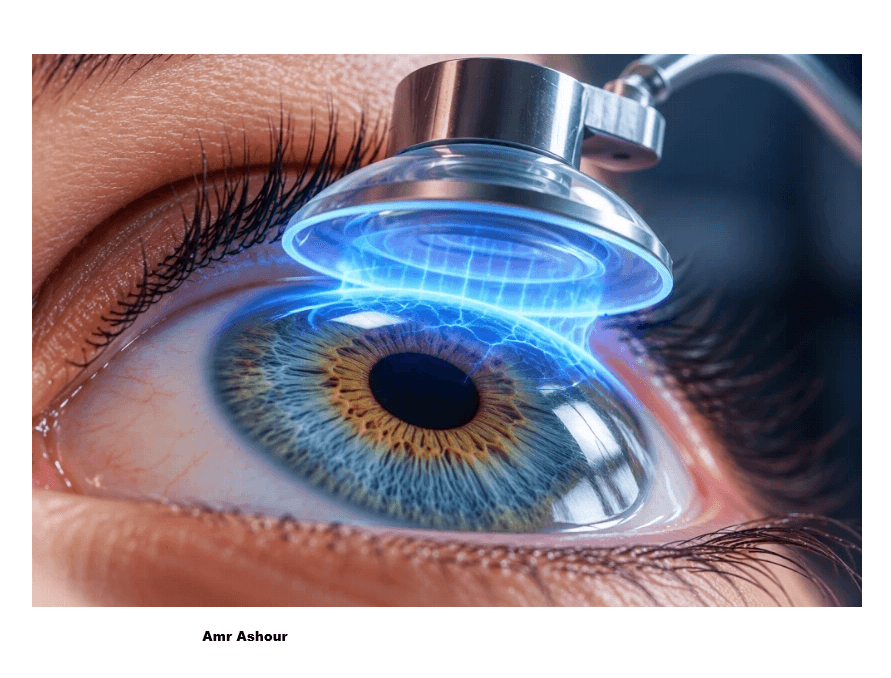
Researchers are testing a new vision-correction technique that reshapes the cornea using electricity—eliminating the need for lasers or surgical incisions. Preliminary results suggest this could pave the way for an alternative to traditional procedures like LASIK.
The technique, known as "Electromechanical Reshaping" (EMR), involves applying a low voltage to temporarily alter the chemical environment within corneal tissue, making it more pliable and amenable to reshaping.
To achieve this, researchers developed specialized platinum lenses placed over the cornea; these serve simultaneously as a mold for the desired shape and as an electrode.
Applying a small voltage induces a controlled change in the cornea's pH level, temporarily weakening the bonds that maintain tissue rigidity and allowing for reshaping.
Experiments showed that the cornea could adapt to the shape of the platinum lens within approximately one minute and retain that new shape even after the tissue's chemical environment returned to normal.
The researchers tested the method on 12 rabbit eyes *ex vivo* (outside the body), treating 10 of them to simulate myopia (nearsightedness). The technique successfully reshaped the corneas in all 10 eyes to achieve the target focal power.
This approach differs fundamentally from LASIK, which relies on using lasers to remove minute amounts of corneal tissue to alter curvature; in contrast, the new method aims to modify the tissue's shape without removing any part of it. Researchers believe that this technique could eventually prove simpler and less costly than some current vision-correction procedures, while also offering the potential to avoid risks associated with the permanent removal of corneal tissue.
However, the findings remain at a very early experimental stage, and the technique has not yet been tested on humans; current trials have been conducted on excised rabbit eyes, meaning there is still a long way to go before its safety and efficacy as a medical vision-correction procedure can be determined.
The researchers plan to continue developing the method and conducting further studies to assess corneal shape stability post-treatment and tissue safety, prior to advancing to more sophisticated experimental stages in the future.
Article reposted by Amr Ashour | IT Specialist